
SC quashes criminal proceedings against Elvish Yadav in snake venom case
It was pleaded that no snake, narcotic or psychotropic substance has been recovered from the applicant.
PTI
-
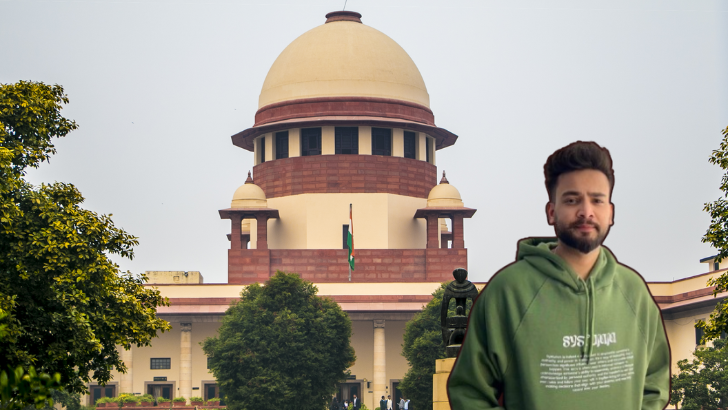
Elvish Yadav had approached the Supreme Court to quash the chargesheet filed against him (PTI)
New Delhi, 19 Mar
The Supreme Court has quashed the criminal proceedings
against YouTuber and Big Boss OTT winner Elvish Yadav in connection with a case
registered against him linked to the smuggling and consumption of snake venom.
A bench of Justices MM Sundresh and N. Kotiswar Singh found
procedural lapses in the manner in which the complaint and FIR were filed and
noted that the same cannot be sustained in law.
"The complaint and the FIR cannot be sustained in law.
We are not going into other issues raised. The Proceedings stands
quashed," the Court noted.
Earlier, Yadav approached the Supreme Court seeking the
quashing of the chargesheet filed against him and the summons issued in the
case.
In May last year, the Allahabad High Court had dismissed his plea, observing that the allegations warranted a thorough legal examination as
multiple FIRs had been registered in the matter.
For reference, Elvish Yadav was chargesheeted under Sections
9, 39, 48A, 49, 50 and 51 of the Wildlife Protection Act and Sections 284, 289
and 120B of the IPC and Sections 8, 22, 29, 30 and 32 of the NDPS Act in the
FIR lodged at Police Station Sector-49, Noida, District Gautam Buddh Nagar.
A summons order was also issued by the First Additional
Chief Judicial Magistrate, Gautam Buddh Nagar. Yadav challenged the chargesheet
and the proceedings on the ground that the informant was not a competent person
to lodge an FIR under the Wildlife Protection Act, 1972.
It was pleaded that no snake, narcotic or psychotropicsubstance has been recovered from the applicant.
Further, it was pleaded that, "It is a well-known fact that the applicant is an influential person and appears on several reality shows on television, and inevitably, the involvement of the applicant in the instant FIR attracted great attention from the media. Consequently, influenced by the aforesaid attention, the police officers attempted to make the case more sensitive by invoking Sections 27 and 27A of the NDPS Act immediately after arresting the applicant."
Share Now

Leave a Reply
Your email address will not be published. Required fields are marked *
Other Stories

.jpg)
.png)

.png)