New Delhi, 18 Dec
Parliament on Thursday passed the nuclear energy bill, with the Rajya Sabha approving legislation aimed at opening the tightly controlled civil nuclear sector to private participation.
The Upper House cleared the Sustainable Harnessing and Advancement of Nuclear Energy for Transforming India (SHANTI) Bill by a voice vote, rejecting Opposition demands to refer it to a parliamentary committee. The Lok Sabha passed the bill on Wednesday.
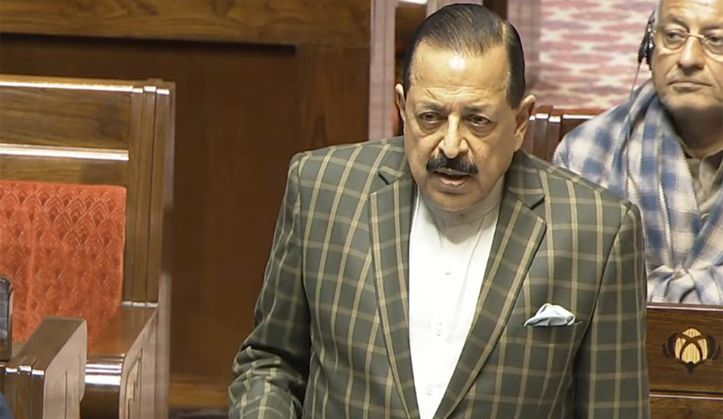
Replying to the debate, Minister of State in the Department of Atomic Energy Jitendra Singh said the legislation seeks to make India self-reliant in nuclear energy while reducing dependence on other energy sources.
Singh said nuclear power offers a reliable 24x7 energy supply, unlike some renewable options. He said India’s nuclear capacity has reached 8.9GW in 2025 and could rise to 100GW by 2047, contributing nearly 10 per cent of the country’s total energy requirement.
“With artificial intelligence coming in a big way, energy needs will rise sharply. Nuclear energy will be the most reliable and steady source,” he said.
Defending private participation, Singh said opening up sectors such as space had yielded significant economic gains. He said the space economy, once struggling, now stands at USD 8 billion and is expected to grow to USD 45 billion in the next eight to 10 years, with more than 300 startups operating in the sector.
Singh said safety provisions under the bill remain unchanged and are aligned with the Atomic Energy Act, 1962. “The standard operating procedures clearly state ‘safety first, second production’,” he said, adding that there has been no report of radiation-related hazards affecting the public.
He said India has emerged as a global leader in addressing climate change, energy security and clean energy after 2014. “India is no longer a follower but a first-line nation offering cues for others,” he said.
Singh said the atomic energy department’s budget has increased from Rs 13,879 crore before 2014 to Rs 37,483 crore in the current year. He said bulk approval was granted in 2017 for setting up 10 nuclear reactors, and in September 2025 the Prime Minister laid the foundation stone for four reactors.
Opposition members raised concerns over the bill. Indian Union Muslim League member Haris Beeran said the legislation weakens the liability framework put in place after the Bhopal gas tragedy, warning that “posterity will judge us badly”.
CPI member PP Suneer questioned the “dangerous haste” in opening one of the country’s most sensitive sectors to private control.
Supporting the bill, Telugu Desam Party member Masthan Rao Yadav Beedha described it as landmark legislation that modernises India’s nuclear legal framework by consolidating the Atomic Energy Act, 1962 and the Civil Liability for Nuclear Damage Act, 2010.