




SC stays Aravalli definition ruling; proposes expert panel
The SC issued a notice to the Centre and others in the suo motu matter and posted it for further hearing on 21 January.
PTI
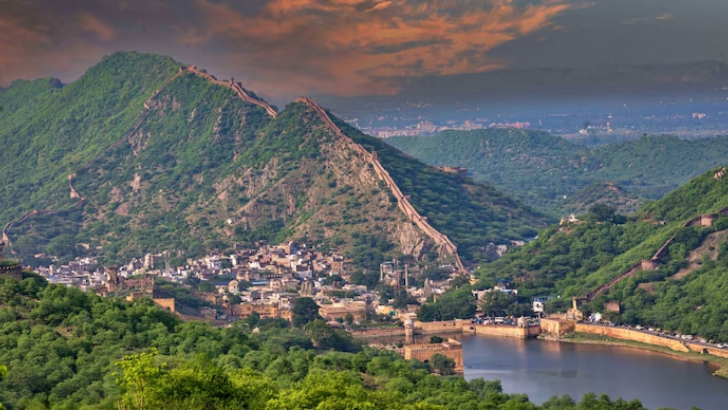
-
A vacation bench proposed to constitute a high-powered committee comprising domain experts (PTI)
New Delhi, 29 Dec
The Supreme Court on Monday kept in abeyance the directions
in its 20 November verdict that had accepted a uniform definition of the
Aravalli hills and ranges.
A vacation bench comprising Chief Justice Surya Kant and
Justices JK Maheshwari and Augustine George Masih proposed to constitute a
high-powered committee comprising domain experts to undertake an exhaustive and
holistic examination of the issue.
"We deem it necessary to direct that the
recommendations submitted by the committee, together with the findings and
directions stipulated by this court in the judgment of November 20, 2025, be
kept in abeyance," the bench said while hearing a suo motu case titled 'In
Re: Definition of Aravalli Hills and Ranges and Ancillary Issues'.
The top court said there are issues that will require
clarification. It issued a notice to the Centre and others in the suo motu
matter and posted it for further hearing on 21 January.
The top court on November 20 accepted a uniform definition
of the Aravalli hills and ranges and banned the grant of fresh mining leases
inside its areas spanning Delhi, Haryana, Rajasthan and Gujarat until experts'
reports are out.
The apex court had accepted the recommendations of a
committee of the Ministry of Environment, Forest and Climate Change on the
definition of the Aravalli hills and ranges to protect the world's oldest
mountain system.
The committee had recommended that "Aravalli Hill"
be defined as any landform in designated Aravalli districts with an elevation of
100 metres or more above its local relief, and an "Aravalli Range"
will be a collection of two or more such hills within 500 metres of each other.
The committee, while defining Aravalli hills, said,
"Any landform located in the Aravalli districts, having an elevation of
100 metres or more from the local relief, shall be termed as Aravalli Hills...
The entire landform lying within the area enclosed by such lowest contour,
whether actual or extended notionally, together with the Hill, its supporting
slopes and associated landforms irrespective of their gradient, shall be deemed
to constitute part of the Aravalli Hills."
The panel also defined the Aravalli Range and said,
"Two or more Aravalli Hills ..., located within a proximity of 500m from
each other, measured from the outermost point on the boundary of the lowest
contour line on either side, form the Aravalli Range.
"The area between the two Aravalli hills is determined
by first creating buffers with a width equal to the minimum distance between
the lowest contour lines of both hills ... The entire area of landforms falling
between the lowest contour lines of these hills, as explained, along with
associated features such as Hills, Hillocks, supporting slopes, etc., shall
also be included as part of the Aravalli Range."
The apex court on 20 November delivered a 29-page judgement
in the suo motu matter arising out of the long-running environmental litigation
in the T N Godavarman Thirumulpad case.
"We further accept the recommendations with regard to
the prohibition of mining in core/inviolate areas with exception as carved out
of the ... committee's report," the top court had said.
It had also accepted the recommendations for sustainable
mining and the steps to be taken for preventing illegal mining in the Aravali
Hills and Ranges.
Share Now

Leave a Reply
Your email address will not be published. Required fields are marked *
Other Stories






.png)
.png)
.png)
