Has IPL mania & batting boom dented the yorker in T20?
The question increasingly being asked in dressing rooms and fan discussions is: Has the league's batting revolution killed the yorker?
PTI

-
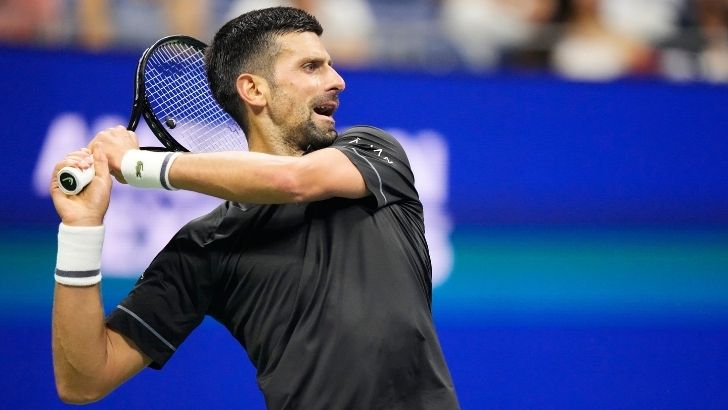
Former India opener and noted coach WV Raman said the tactical shift stems from the unforgiving nature of the classical yorker (ANI)
New Delhi, 5 May
There was a time when the final overs of a T20 contest
carried a familiar script. As panic spread through the batting side and the
equation tightened, captains would turn to specialists capable of delivering cricket's
ultimate pressure-release valve -- the classical yorker.
But in an IPL era increasingly shaped by 220-plus totals,
premeditated ramps, reverse scoops and batters willing to stand virtually
anywhere on the crease, the delivery that once inspired dread is facing its
sternest test.
The question increasingly being asked in dressing rooms and
fan discussions is: Has the league's batting revolution killed the yorker? Has
the yorker become a high-risk delivery that hapless bowlers prefer to avoid?
Not really. We can hold off on writing the yorker's epitaph,
say the pundits.
The delivery that once defined an era built by Lasith
Malinga and perfected by Bumrah still survives. Only now, in a batter-dominated
age, it demands even greater courage and precision to remain cricket's ultimate
finishing weapon.
"The yorkers remain an important part of the game even
though it has become a batter's game," Madan Lal, former India
all-rounder, told PTI. "You have to be very consistent in your line and
length for a yorker. You have to hit the lower side of the bat. If it hits
slightly higher it is a six. Same with wide yorkers. Your length is key,"
said Lal, a member of the 1983 World Cup winning squad.
"You have to keep practising for that. Yorkers and
slower ones remain part of the game very much," he said.
Other experts echo Lal. The consensus view is that while IPL
has not killed the yorker, it has exposed the cricketing nuclear option's
vulnerabilities, increased the punishment for imperfection and elevated its
execution into one of cricket's rarest acts of skill.
What has changed, experts say, is that T20 cricket has
forced the yorker to evolve from a routine death-over option into a specialist
skill requiring extraordinary precision.
There was a time when yorkers built reputations and decided
championships. From Lasith Malinga's toe-crushing precision for Mumbai Indians
to Dwayne Bravo's slower-yorker variations for Chennai Super Kings and the
near-mechanical accuracy of Jasprit Bumrah, the yorker was for years the
definitive image of death bowling in the Indian Premier League.
Deep Dasgupta, a former India wicketkeeper-batter and TV
analyst, believes the biggest transformation lies in the changing movement
patterns of modern batters.
"The classical toe-crushing yorker that Wasim
(Akram)and Waqar (Younis) used to bowl back then were on toes that were static
targets because batters didn't have big trigger movement or shuffle in ODIs or
Tests," he said.
"But nowadays, with changing landscape of T20 cricket,
the batter uses the depth of the crease. There are pronounced triggers. Gone
are the days when toes were static. Now suddenly if you practice bowling a
traditional yorker and suppose a batter goes deep, it is no longer a yorker but
a half-volley.
"If he stands a foot outside the crease, the same
delivery could be a full toss. The batters also now move sideways to make room,
so toes are also not staying static for you to target and execute a traditional
yorker," Dasgupta told PTI.
The shift is reflected in IPL scoring patterns.
Death-over run rates have steadily climbed over the years as
batters have transformed finishing into a science, using movement and
anticipation to convert even marginal errors into boundaries.
The average death over (17 to 20th over) run rate in the
inaugural IPL in 2008 was 9.41 which steadily climbed to 11.5 by 2025.
Similarly, the average team score in 2008 was 157 which has shot up to 180 in
2025.
The introduction of the impact player rule in 2023 has also
played a big part in the yorker being a less preferred weapon in the slog overs.
The much-debated rule has tilted the game heavily towards batters by allowing a
team to substitute a player at any time of the match. In effect, it strengthens
the batting line up.
The yorker's margin of error, always slim, has become
microscopic. A delivery that misses by inches can instantly turn from a
match-winning weapon into a boundary ball.
That is precisely why franchises have increasingly moved
towards hard lengths, slower balls and wide-line variations as their preferred
death-over strategies. The wide yorkers have also become an option to prevent
the batsmen from improvising.
Dasgupta explained that modern bowlers are no longer simply
aiming at the base of the stumps.
A traditional yorker is a delivery that targets the base of
the stumps tailing in middle-leg. "But the flip-side is if you err during
death (overs) and the leg-side is vacant, you will be punished. Hence wide
yorker is a delivery where you play with the line and even if you miss the
length, there are times when you can still stay away from batter's hitting arc
because of the wide lines that you use," he said.
Former India opener and noted coach W V Raman said the
tactical shift stems from the unforgiving nature of the classical yorker.
"Very little margin when they are toe-crushers.
Slightly off-line or length can be hit anywhere. Wide yorkers, at least you can
provide some protection on one side. And variation of pace, wide of off stump,
makes it difficult for batters, at least theoretically," he said.
That recalibration has transformed death bowling. The old
formula was straightforward: bowl a few yorkers and trust execution.
Today's elite bowlers work differently.
They use slower balls, hard lengths and changes of angle to
set the batter up before slipping in the yorker as the surprise blow. No one
exemplifies that better than Bumrah, who uses the delivery sparingly but
devastatingly. But in this IPL, even Bumrah has gone for runs.
In the ongoing season, with reverse swing returning in
patches, bowlers like Mitchell Starc have shown that when executed withmovement, the yorker remains virtually unplayable.
Indian bowlers like Anshul Kamboj (CSK), Vyshak Vijaykumar
(Punjab Kings) and Kartik Tyagi (Kolkata Knight Riders) have obtained
reasonable success with execution of wide yorkers.
"The yorker is still the best ball especially when
there is reverse swing. But it has to be executed properly. Bowlers are now
going for wide yorkers . I would say the wide yorker is the toughest to master,"
Sarandeep Singh, former India spinner and selector, he said.
Share Now

Leave a Reply
Your email address will not be published. Required fields are marked *
Other Stories



.png)


.png)