




Modi-Bibi friendship and the Gaza shadow
The trip unfolds as Israel confronts mounting international pressure and allegations of war crimes and genocide over its devastating campaign in Gaza.

.jpeg)
-
PM Narendra Modi embraces Israeli PM Benjamin Netanyahu; A mother holding her son suffering severe malnutrition in Gaza, his ribs visibly protruding during Israel’s blockade on aid (PTI/NPR)
Thirty-eight years after becoming one of the first non-Arab nations to recognise Palestine, India’s West Asia policy faces renewed scrutiny. As Prime Minister Narendra Modi arrives in Israel for a two-day visit beginning 25 February, the symbolism is inescapable.
The trip unfolds as Israel confronts mounting international pressure and allegations of war crimes and genocide over its devastating campaign in Gaza.
Modi was scheduled address the Knesset, meet Israeli Prime Minister Benjamin Netanyahu in Tel Aviv and travel onwards to Jerusalem for high-level engagements. For Netanyahu, beleaguered at home and abroad, the visit is being hailed as “historic”.
For Modi, it reaffirms a relationship he has methodically
elevated since taking office in 2014. Globally, however, the optics are
fraught: the leader of the world’s largest democracy appearing alongside a
government accused before international courts of genocide.
The
fallen wall
Thisis Modi’s second visit to Israel. His first, in July 2017, was itself
unprecedented — the first ever by an Indian prime minister. The images were
carefully choreographed: Netanyahu greeting him at Ben Gurion airport, the two
men embracing on the tarmac, and later walking barefoot along a Mediterranean beach
inspecting a desalination plant. Modi called it a “path-breaking journey”, and
the pair pledged to “break down the remaining walls” between their nations.
Nine
years on, those walls have fallen. What was once discreet and low-profile has
become one of India’s most publicly celebrated partnerships abroad. Modi has
repeatedly referred to Netanyahu as a “dear friend,” even in the wake of the
International Criminal Court issuing an arrest warrant against the Israeli
Prime Minister in late 2024 over alleged war crimes in Gaza.
However,
the situation today is dramatically different from 2017. Since the Hamas-led
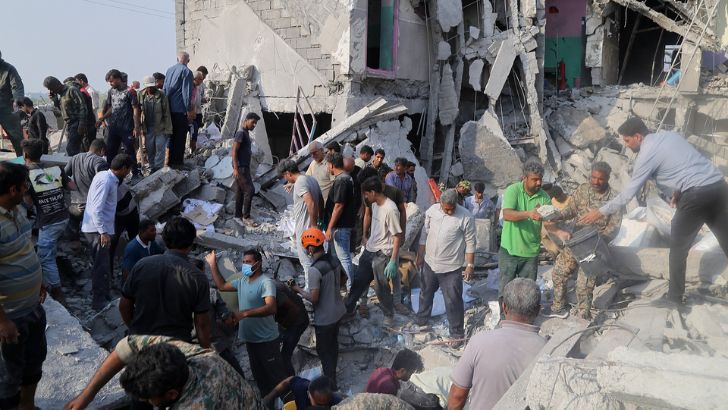
attacks of 7 October 2023, Israel’s military action has reduced Gaza to rubble.
More than 72,000 people, including women and children, are reported to have
been killed over two years of bombardment. Aid agencies describe catastrophic
humanitarian conditions; experts warn the true toll may be far higher, with
many buried beneath collapsed buildings. Images of starving children circulate
widely online, fuelling protests and intensifying legal scrutiny of Israel’s
conduct.
The
criticism
Against
this backdrop, Modi’s presence in Jerusalem risks being read as a political
endorsement. A parliamentary panel in India has reportedly questioned the
timing of the visit, citing volatile regional tensions and a visible United
States military build-up in West Asia. Opposition leaders, particularly from
the Congress party, accuse the government of abandoning Palestine. Jairam
Ramesh, the party’s communications chief, has called the trip “cynical and
hypocritical”.
Controversy
extends to Israel itself. Modi’s address to the Knesset has become entangled in
domestic political disputes, with sections of the opposition threatening a
boycott unless Supreme Court President Isaac Amit is invited, amid tensions
over judicial reforms. The Speaker has reportedly considered inviting former
lawmakers to fill potential empty seats. Yet for all the criticism, the visit
reflects a long-term strategic calculation in New Delhi.
From
Palestine to partnership
India opposed the United Nations’ 1947 partition plan for Palestine and recognised the Palestinian state in 1988, becoming one of the first non-Arab countries to do so. For decades, New Delhi was a staunch advocate of Palestinian self-determination, rooted in its leadership of the Non-Aligned Movement and its post-colonial solidarity politics. Even before independence, Mahatma Gandhi criticised the “imposition of Jews over Arabs” through the creation of Israel.
The end of the Cold War and India’s economic liberalisation triggered a recalibration. As New Delhi drew closer to Washington, it also formalised ties with Israel. Diplomatic relations were established in 1992, and defence ties were central to the bilateral trade.
According to the Stockholm International Peace Research Institute, India accounted for 34 per cent of Israel’s defence exports between 2020 and 2024, purchasing an estimated $20.5 billion worth of military equipment. Since 2014, India has become Israel’s largest weapons customer.
In 2024, as Israel prosecuted its war in Gaza, Indian firms
reportedly supplied rockets and explosives.
Cooperation has since broadened. Bilateral trade, excluding defence, peaked at $10.77 billion in 2022–23. India is now Israel’s second-largest Asian trading partner in goods after China, with commerce dominated by diamonds, petroleum and chemicals.
The two sides signed a Bilateral Investment Treaty last year and continue negotiations on a free trade agreement. The relationship spans innovation, cybersecurity, agriculture, water technology, space cooperation, and counterterrorism.
Call
for 2 states
Modi
was among the first world leaders to condemn the 7 October attacks and express
solidarity with Israel. Since then, while India has reiterated calls for
dialogue and a two-state solution, it has avoided direct criticism of Israel’s
conduct in Gaza.
After
Israel barred Palestinian workers following the October 2023 attacks, thousands
of Indians reportedly applied for construction jobs there.
Still, this visit carries heavier implications than any before it. Netanyahu’s government faces domestic anger over intelligence failures linked to 7 October and over efforts to curb judicial independence. Internationally, Israel confronts legal challenges and deepening diplomatic isolation. Modi’s arrival offers Netanyahu a potent image: a major Global South leader standing beside him as others hesitate.
For India, the calculation is more complex. It seeks to project itself as a voice of the Global South and a champion of a rules-based international order, even as it defends “strategic autonomy” in foreign policy.
Balancing deepening ties with Israel against historical commitments to Palestine — and against global outrage over Gaza — will test that posture. When Modi steps up to the Knesset podium, the applause may echo far beyond Jerusalem. Whether it resonates as “pragmatic statecraft” or moral abdication will depend on who is listening.
Share Now

Leave a Reply
Your email address will not be published. Required fields are marked *
Other Stories
.png)




.png)
