US-Iran peace talks in Islamabad fail after 21-hour long negotiations
The US Vice President said the US presented its "final and best offer" to the Iranian side but it did not accept it.
PTI
-
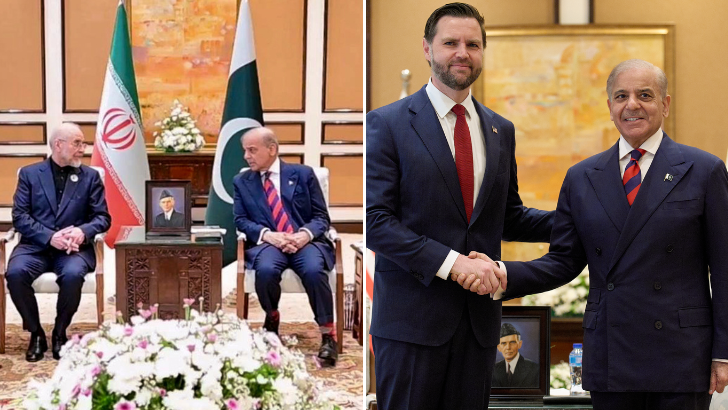
After the marathon negotiations failed, both US and Iran have started blaming each other (PTI)
Islamabad, 12 April
The US and Iran failed to reach a peace deal at their
historic 21-hour talks in Pakistan to end the West Asia conflict with US Vice
President JD Vance on Sunday citing Tehran not forgoing its nuclear programme
as one of the key sticking points.
The failure to arrive at an agreement following the
face-to-face negotiations between the two sides raised doubts over the
effectiveness of their fragile two-week ceasefire as well as the prospect of
reopening of the Strait of Hormuz to stabilise the global energy market.
"We have been at it now for 21 hours. We've had a
number of substantive discussions with the Iranians, that's the good
news," Vance, who led the US delegation at the talks in Islamabad, said at
a press conference.
"The bad news is that we have not reached an agreement
and I think that's bad news for Iran much more than it's bad news for the
United States of America."
The US Vice President said the American side presented its"final and best offer" to the Iranian side but it did not accept it.
"We just could not get to a situation where the
Iranians would accept our terms," he said.
To a question on Iran's nuclear programme, Vance said the US
President Donald Trump's "core goal" is to stop Iran from having
nuclear weapons.
"The simple fact is that we need to see an affirmative
commitment that they will not seek a nuclear weapon and they will not seek the
tools that will enable them to quickly achieve a nuclear weapon," he
asserted.
"We leave here with a very simple proposal, a method of
understanding that this is our final and best offer. We'll see if the Iranians
accept it," Vance said.
The Iranian foreign ministry said the success of the
"diplomatic process depends on the seriousness and goodwill of the other
side, and refraining from excessive and illegal demands"
US special envoy to West Asia Steve Witkoff and Trump's
son-in-law and White House advisor Jared Kushner were also part of the US team.
The Pakistan-brokered negotiations began Saturday, four days
after the two sides announced a six-day ceasefire.
It was the first direct, high-level engagement between Iran
and the US since the 1979 Islamic Revolution.
Vance said the negotiating team was in touch with President
Trump and other top US officials.
Iran had laid out a 10-point plan for the talks that
included demands for the withdrawal of US forces from West Asia, the lifting of
sanctions against Iran, and allowing it to control the Strait of Hormuz.
Pakistan led the diplomatic push to bring the two sides to
the table, which became possible after an appeal by Prime Minister Sharif
earlier this week, leading to a pause in the fighting.
The conflict began after the US and Israel launched attacks
on Iran on February 28, paralysing global energy markets and disrupting trade.
The negotiations were closely watched globally, for their
likely far-reaching implications for West Asia's security, global energy
markets, and international diplomacy.
Share Now

Leave a Reply
Your email address will not be published. Required fields are marked *
Other Stories



.png)