Karnataka Cong forms committee to study process, modalities for student union election
Shivakumar has constituted a committee of party leaders to study the process and modalities for conducting student union elections.
PTI
-
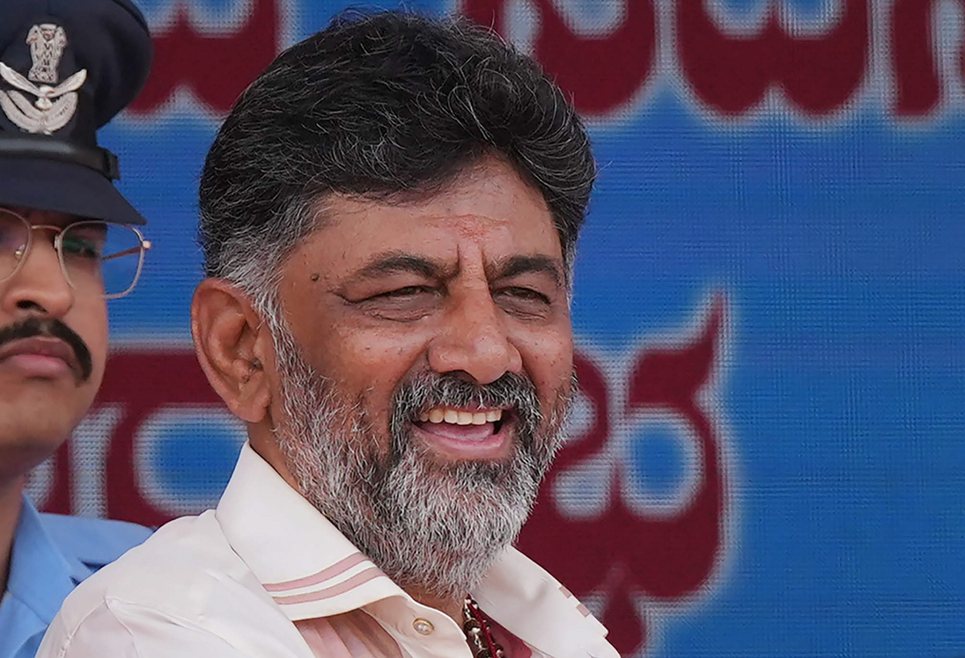
Shivakumar had on several occasions recalled his days as a student leader and how they nurtured his political growth (PTI)
Bengaluru, 28 Dec
Karnataka state chief of the ruling Congress, D K Shivakumar, has constituted a committee of party leaders to study the process and modalities for conducting student union elections in the state and to submit a report.
Shivakumar,
who is also the Deputy Chief Minister, during a recent Constitution Day event,
had spoken about the plans to reintroduce student union elections in Karnataka,
which he said would create political leadership on campuses.
Medical
Education Minister Sharan Praksah Patil has been appointed as the convenor of
the nine-member committee, which includes Higher Education Minister Sudhakar,
MLAs, MLCs, and state presidents of Youth Congress and National Students' Union
of India (NSUI).
The
committee has been asked to submit its report and recommendations within 15
days, Shivakumar said in a letter dated December 27.
"Conducting
elections to student unions promotes democratic representation among students.
Based on the views expressed by party leaders and workers that it helps in
maintaining academic discipline and develops leadership qualities among
students, the Karnataka Pradesh Congress Committee (KPCC) has considered
conducting elections to student unions," he said.
The
committee is being formed, aimed at obtaining detailed information about the
current conditions and the feasibility for conducting such elections, the KPCC
chief said, adding that the committee will have to submit a comprehensive
report with recommendations.
Student
elections were banned in Karnataka in 1989 by the then Congress government led
by Chief Minister Veerendra Patil, reportedly in response to a series of
violent incidents and clashes on college campuses, as well as the increasing
influence of political parties in campus life.
Terms of
Reference (TOR) for the committee include studying and recommending on the
stages at which elections can be held; pros, cons and consequences of holding
elections; to provide a detailed report on whether elections should be held
under the name of a party or based solely on ideologies or in a non-political
manner, with the aim of student welfare.
The
committee will also study aspects like election and candidacy qualifications;
information about the process and system for conducting elections; election
costs and transparency; complaint resolution and security system;
representation and inclusive education (participation); reservation of seats or
quota for women, marginalised communities and students with disabilities, and
regarding determining the duration of the student union without disrupting the
education and academic schedule of the students.
Shivakumar
had on several occasions recalled his days as a student leader and how they
nurtured his political growth.
Share Now

Leave a Reply
Your email address will not be published. Required fields are marked *
Other Stories

.png)
.png)

.jpg)