Bengaluru identifies 90 official feeding zones for stray dogs
Karnataka Health Minister Dinesh said the State government aims to reduce rabies deaths to zero by 2030.
Agencies
-
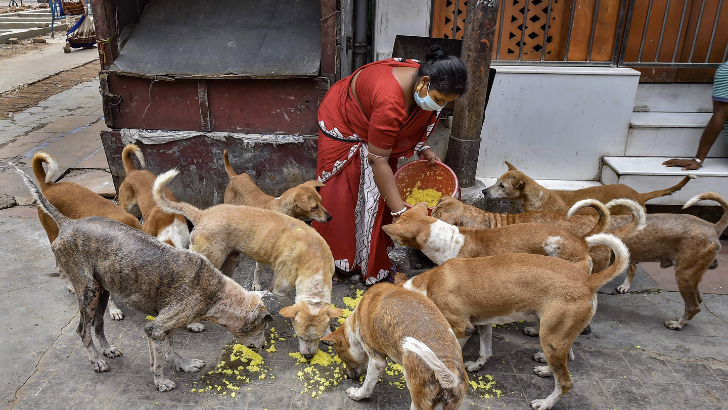
The 90 places were identified across all the wards of the Greater Bengaluru Authority (GBA) (PTI)
Bengaluru, 28 Feb
The Animal Husbandry
Department of the Bengaluru Central Municipal Corporation on Saturday
designated 90 specific locations as official feeding zones for stray dogs
within its jurisdiction. This initiative aims to balance animal welfare with
public health and urban cleanliness across the central parts of the city.
The administration said
that food should be provided to stray dogs only at officially identified
feeding spots and must not be distributed on main roads or near hospitals,
schools, or crowded areas.
"Signboards called
feeding points have been installed at the identified places, and the public can
feed them at the said places,” Daljit Kumar, Additional Commissioner of
Development, Central Municipal Corporation, said.
Kumar said that
"providing food to community dogs/stray dogs in a systematic manner can
reduce their aggressive nature and biting tendency by satisfying their hunger,
which will be helpful in neutering stray dogs and conducting mass vaccination
programs."
The feeding spots were
identified in “priority places such as main roads, schools-colleges, hospitals,
bus stands, metro stands and other public places where there is no
inconvenience to the citizens walking and away from crowded areas” he said,
adding that it was done as per the guidelines of the Supreme Court of India andthe Animal Welfare Board of India.
The 90 places were
identified across all the wards of the Greater Bengaluru Authority (GBA).
Additionally,
removing, defacing, or destroying signs at official feeding spots is a
punishable crime, and harming or harassing stray dogs remains a punishable
offence.
On Friday, Health
Minister Dinesh Gundu Rao said the State government aims to reduce rabies
deaths to zero by 2030 and launched the State Action Plan for Dog-Mediated
Rabies Elimination.
Anti-rabies vaccines
and rabies immunoglobulin will be made available at all Primary Health Centres,
Community Health Centres, taluk hospitals and district hospitals across the State,
and maintaining adequate stocks has been made mandatory, Rao said.
Private hospitals have
also been directed to ensure continuous availability of these medicines and to
provide treatment without insisting on advance payment, he added.
The State Action Plan
was also launched for Prevention and Control of Snakebite Envenoming (SAPSE).
“Free treatment will be provided for snakebite cases as well, and private hospitals have been directed to provide immediate life-saving treatment to victims without insisting on advance payment,” Rao said.
Share Now

Leave a Reply
Your email address will not be published. Required fields are marked *
Other Stories
.png)
.png)

.jpg)