‘Open war’: Pakistan says patience over after strikes on Afghanistan
The escalation comes months after Qatar andTurkiye mediated a ceasefire between the two sides.
PTI
-
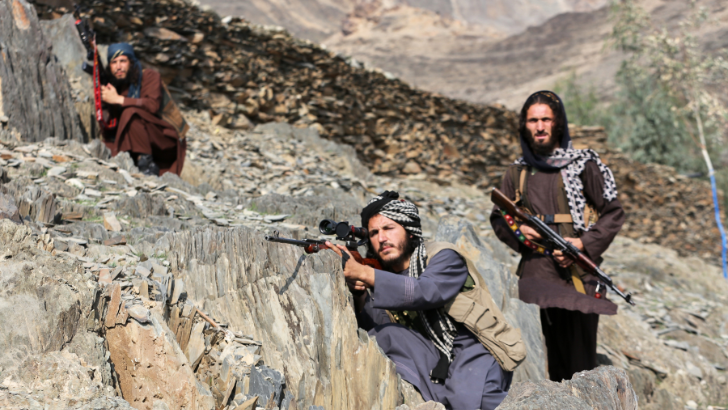
Afghanistan has claimed to have killed over 50 Pakistani soldiers in retaliatory operations on 26 Feb (PTI)
Islamabad, 27 Feb
Pakistan's Defence Minister said early
Friday that his country had run out of “patience” and now considers itself in
an “open war” with neighbouring Afghanistan after both sides launched strikes
following what Islamabad described as an Afghan cross-border attack.
In a post on X, Defence Minister Khawaja
Mohammad Asif said Pakistan had hoped for peace in Afghanistan after the
withdrawal of NATO forces and expected the Taliban to focus on the welfare of
the Afghan people and regional stability..."
“Our patience has now run out. Now it is
open war between us,” he said. There has been no reaction from Afghan
government officials to Asif's comments.
His remarks came hours after Pakistan
carried out airstrikes in Afghanistan's capital, Kabul, as well as in Kandahar
in the south and Paktia province in the southeast, according to Pakistani
officials and Afghanistan government spokesperson Zabihullah Mujahid. Pakistan
says the strikes were in retaliation for Afghan cross-border attacks.
The escalation comes months after Qatar andTurkiye mediated a ceasefire between the two sides.
Both governments have issued sharply
differing casualty claims and said they inflicted heavy losses on the other.
The claims could not be independently verified.
Afghanistan's Defence Ministry said
overnight that 55 Pakistani soldiers had been killed, including some whose
bodies were taken into Afghanistan, and that “several others were captured
alive.” It said eight Afghan soldiers were killed and 11 wounded. The ministry
said it destroyed 19 Pakistani army posts and two bases and that the fighting
ended around midnight, about four hours after it began Thursday.
Pakistan's Information Minister Attaullah
Tarar said two Pakistani soldiers were killed and three wounded.
Mosharraf Ali Zaidi, a spokesperson for
Pakistan's Prime Minister Shehbaz Sharif, denied that any Pakistani soldiers
had been captured.
In a post on X, he said at least 133 Afghan
fighters were killed and more than 200 wounded. He also said 27 Afghan posts
were destroyed and nine fighters captured. He did not specify where the
casualties occurred but said additional losses were estimated in strikes on
military targets in Kabul, Paktia and Kandahar.
In Islamabad, two senior security officials
said Afghan forces at some border posts had raised white flags, a gesture
typically interpreted as a request to halt firing. The officials said Pakistani
forces were continuing what they described as a strong retaliatory response to
“unprovoked aggression” by the Afghan Taliban and had destroyed several key
Taliban posts along the border.
The officials spoke on condition of
anonymity because they were not authorized to speak publicly.
Asif also accused the Taliban government of
denying Afghans basic human rights, including rights for women that he said are
guaranteed under Islam, without providing details or evidence.
He said Pakistan had tried to maintain
stability both directly and through friendly countries.
“Today, when attempts were made to target
Pakistan with aggression, by the grace of God, our armed forces are giving a
decisive response,” he said.
Authorities in Pakistan said dozens of
Afghan refugees who were waiting to return home from the northwestern Torkham
border have been taken back to safer places following the eruption of clashes.
Pakistan launched a sweeping crackdown in
October 2023 to expel migrants without documents, urging those in the country
to leave of their own accord to avoid arrest and forcible deportation and
forcibly expelling others. Iran also began a crackdown on migrants at around
the same time.
Since then, millions have streamed acrossthe border into Afghanistan, including people who were born in Pakistan decades
ago and had built lives and created businesses there.
Last year alone, 2.9 million people
returned to Afghanistan, the U.N. refugee agency has said, with nearly 80,000
having returned so far this year.
Share Now

Leave a Reply
Your email address will not be published. Required fields are marked *
Other Stories

.png)